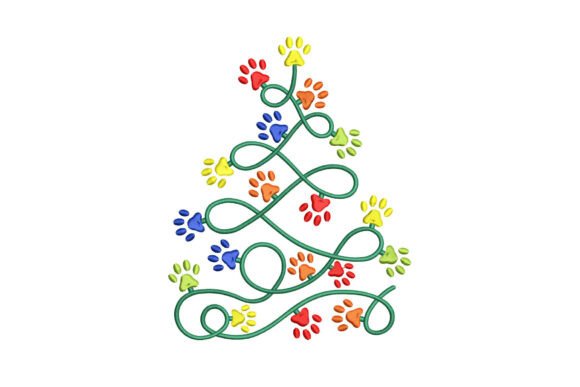
Paw Christmas Tree Embroidery Review
As an embroidery designer who has spent years translating digital concepts into tangible textile experiences, I approach every new design file with a critical eye. My goal is never just to create something that looks good on a screen, but to ensure it performs flawlessly in production. Today, I am reviewing the Paw Christmas Tree, a machine embroidery design that promises to add beauty and texture to your work. For small business owners, Etsy sellers, and apparel decorators, understanding the practical application of a design like this is crucial before committing to bulk production.
First Impressions: Visual Personality and Brand Fit
The title Paw Christmas Tree immediately suggests a blend of two distinct themes: pet-centric warmth and seasonal cheer. From a design perspective, this combination offers a unique handcrafted feel that can elevate standard merchandise. The description highlights its decorative nature, positioning it as suitable for both home and fashion projects. In the context of branded merchandise, this duality is powerful.
When I first visualized this design, I saw a piece that feels friendly, playful, yet professional enough for high-end boutique items. It avoids being overly childish, which makes it versatile for brands targeting adults who love their pets or those looking for sophisticated holiday gifts. The emphasis on "texture" in the product description hints at a design that likely utilizes varied stitch types—perhaps satin stitches for outlines and fill stitches for volume—to create depth. This textural quality is essential for standing out in a market saturated with flat, basic prints.
Real-World Business Applications
For small business merch creators, the true value of the Paw Christmas Tree lies in its adaptability across various product lines. Here is how I see this design performing in real commercial scenarios:
- Embroidered Patches: This design is ideal for creating sew-on or iron-on patches. Pet brands and local bakeries often use patches to mark inventory bags or customer loyalty cards. The festive theme makes it a perfect limited-edition item for the holiday season.
- Staff Uniforms and Aprons: Imagine a cozy café or a florist shop where staff wear branded aprons. A subtle Paw Christmas Tree accent on the chest or pocket adds a touch of personality without overwhelming the uniform. It signals to customers that the brand cares about details and creates a welcoming atmosphere.
- Cap Embroidery: For craft businesses selling hats, this design works well as a centered chest logo. The compact nature of most tree designs ensures it fits neatly within standard hoop sizes while remaining legible from a distance.
- Tote Bag Design: Canvas totes are staples for handmade brands. Placing this design on a tote bag transforms a simple accessory into a statement piece. It appeals to shoppers looking for eco-friendly, aesthetically pleasing bags that double as holiday gifts.
- Custom Apparel and Work Shirts: Boutique clothing lines can use this as a sleeve detail or back print alternative. It adds a premium feel to plain t-shirts or hoodies, increasing the perceived value of the finished product.
- Product Packaging Accents: Beyond apparel, this design can be used on gift tags, hang tags, or even stamped onto packaging boxes. Consistency between your product embroidery and your packaging reinforces brand identity.
Strategic Considerations and Limitations
While the Paw Christmas Tree has strong potential, no design is universal. As a professional reviewer, I must highlight areas where caution is required to maintain quality control.
Small Patch Sizes and Cap Fronts: If you plan to digitize this for very small applications, such as a 2-inch patch or a tiny logo on a cap front, intricate details may get lost. Always test the design at its intended final size. If the paw elements or tree branches are too fine, they may merge together during stitching, resulting in a muddy appearance.
High Stitch Density and Fabric Texture: Designs with high stitch density can become stiff and heavy. On delicate fabrics like thin cotton tees or silk blends, this weight might cause puckering. Conversely, on textured fabrics like thick fleece or wool, the needle penetration might be inconsistent, leading to skipped stitches. Always inspect spacing and confirm that the design’s density matches the fabric weight.
Curved Surfaces and Hoop Size: Embroidering on curved surfaces like caps or rounded tote corners requires careful hooping. Ensure the hoop size of your digitized file allows for proper tension management on these curves. If the design extends beyond the stable area of the hoop, distortion is likely.
Detailed Outlines and Dark Uniforms: If your brand uses dark uniforms, thread color contrast becomes paramount. Light-colored threads on dark backgrounds require adequate underlay and stitch coverage to prevent the base fabric from showing through. Test your thread colors thoroughly to ensure readability and vibrancy.
Impact on Brand Identity and Customer Trust
Quality embroidery communicates professionalism. A well-executed Paw Christmas Tree design enhances brand recognition by associating your business with high-quality craftsmanship. Customers often equate detailed embroidery with durability and care. When a client sees a crisp, clean stitch job on a tote bag or apron, it builds trust in your overall product line. It elevates your brand identity from a generic seller to a curated, thoughtful creator. Furthermore, using seasonal designs like this can boost buyer engagement during peak shopping periods, making your products feel timely and relevant.
Practical Designer Notes for Production
Before adding the Paw Christmas Tree to your commercial catalog, follow these essential steps to ensure a successful launch:
- Test in Black and White: Convert the design to monochrome to check the balance of negative space and solid areas. This helps identify if any parts of the design are too sparse or overcrowded.
- Check Small Patch Viability: Run a sample at the smallest size you intend to produce. Inspect the edges for fuzziness and the center for clarity.
- Review Thread Color Contrast: Select thread colors that pop against your target fabric. Avoid low-contrast combinations that fade into the background.
- Inspect Spacing and Density: Zoom in on the digitization to ensure there is enough space between elements to prevent stitching collisions.
- Confirm Hoop Size: Verify that the design dimensions fit comfortably within your standard hoops to avoid trimming issues.
- Test on Real Fabric: Never rely solely on digital mockups. Stitch the design on the actual fabric type you will use in production. Different materials react differently to tension and stabilizers.
- Use Proper Stabilizer: Match your stabilizer (cut-away, tear-away, or wash-away) to the fabric weight. This prevents puckering and ensures the finished product lays flat.
- Create a Printable Mockup: Use a printable mockup to visualize the design on your specific products before cutting fabric. This helps in presenting options to clients or planning inventory.
- Compare Design Assets: Place the Paw Christmas Tree beside other design assets in your collection to ensure visual consistency in style and scale.
- Confirm Commercial Licensing: Most importantly, verify that you have the correct commercial license for the digital embroidery file. Using unauthorized files for commercial embroidery projects can lead to legal issues. Check the terms provided with the file download.
In conclusion, the Paw Christmas Tree offers a charming, textured option for businesses looking to expand their holiday offerings. By paying attention to technical details like stitch density, fabric choice, and licensing, you can transform this decorative design into a profitable, professional asset for your brand.